Investment Diversification: Index Funds, Stocks, and Portfolio Balance

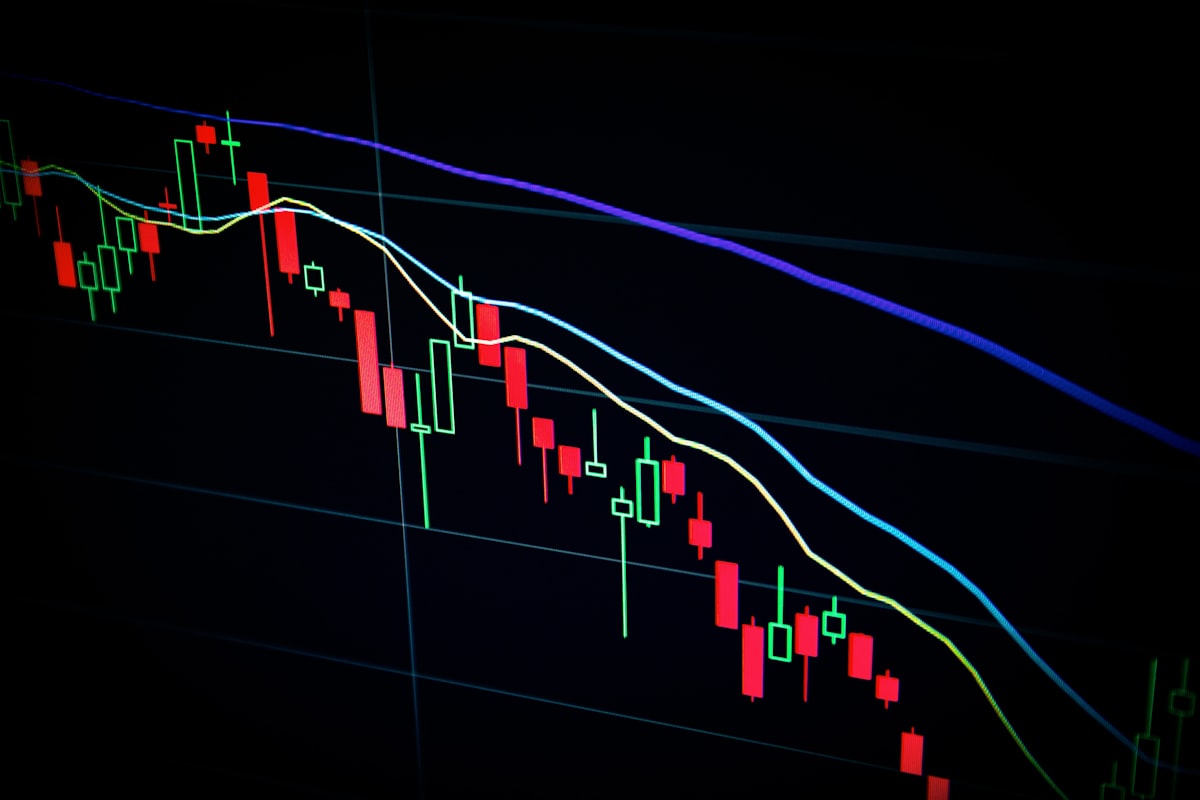
Diversification is one of the most fundamental principles in investing, yet it's often misunderstood or poorly implemented. At its core, diversification means spreading your investments across different asset classes, industries, and geographies so that poor performance in one area doesn't devastate your entire portfolio. It won't prevent losses entirely, but it significantly reduces the risk that a single bad bet wipes out your savings.
Why Diversification Matters
The historical record is clear: concentrated portfolios carry dramatically more risk than diversified ones. Enron employees who held mostly company stock in their retirement accounts lost their jobs and their retirement savings simultaneously. Investors heavily concentrated in technology stocks in 2000 or real estate in 2008 experienced devastating losses that diversified investors weathered more comfortably. Diversification works because different asset classes tend to perform differently under the same economic conditions — when stocks fall, bonds often hold steady or rise, and vice versa.
Index Funds vs. Individual Stocks
For most investors, index funds are the most effective tool for diversification. An index fund that tracks the S&P 500 gives you exposure to 500 large U.S. companies in a single purchase. A total stock market fund covers thousands of companies across all sizes. International index funds add geographic diversification. The fees are minimal (often 0.03-0.10% annually), and decades of research show that index funds outperform the majority of actively managed funds over the long term. Individual stock picking, by contrast, concentrates risk in a small number of companies and requires significant knowledge, time, and emotional discipline to execute well.
{{cta|primary|Evaluate Your Investment Approach|Take our quick quiz to see how your current portfolio strategy stacks up and where adjustments might help.|Take the Quiz|/quiz/investor-type-quiz|#2563EB|#EFF6FF}}
Asset Allocation by Age
Your asset allocation — the mix of stocks, bonds, and other investments — should reflect your time horizon and risk tolerance. A common guideline is to subtract your age from 110 to determine your stock allocation: a 30-year-old would hold 80% stocks and 20% bonds, while a 60-year-old would hold 50% stocks and 50% bonds. This gradually shifts toward stability as retirement approaches. Within your stock allocation, aim for a mix of U.S. and international exposure, and within bonds, diversify across government and corporate issues with varying maturities.
Evaluating Your Portfolio Balance
To assess your current diversification, look at your total investment picture across all accounts — 401(k), IRA, brokerage, HSA. Check whether you're overconcentrated in any single stock, sector, or asset class. Many people discover they're heavily weighted toward their employer's stock, U.S. large-cap equities, or technology companies without realizing it. Target-date retirement funds automate diversification and rebalancing for investors who prefer a hands-off approach, making them an excellent option for many retirement savers.
{{cta|minimal|Investment Research Tools|Free portfolio analysis and allocation calculators|Analyze Your Portfolio|https://www.portfoliovisualizer.com/|#2563EB|#EFF6FF}}
Rebalancing: Maintaining Your Target
Over time, market movements cause your allocation to drift from your target. If stocks have a great year, they may grow from 80% to 88% of your portfolio, increasing your risk exposure beyond what you intended. Rebalancing — selling some of the overweighted asset and buying the underweighted one — maintains your intended risk level. Most financial advisors recommend rebalancing annually or whenever an allocation drifts more than 5-10 percentage points from its target. Many 401(k) plans and robo-advisors offer automatic rebalancing.
{{cta|banner|More Investment & Finance Guides on BDG|Browse our full library of personal finance and investing articles.|Read More|/blog|#2563EB|#EFF6FF}}
Frequently Asked Questions
{{faq-start}}{{faq-q}}How many stocks do I need for proper diversification?{{/faq-q}}{{faq-a}}Research suggests that 20-30 individual stocks across different sectors provides reasonable diversification, but an index fund achieves this more efficiently with a single purchase. A total stock market index fund holds thousands of stocks, providing far more diversification than most individual stock portfolios.{{/faq-a}}{{faq-q}}Can I be too diversified?{{/faq-q}}{{faq-a}}In theory, excessive diversification (called "diworsification") can dilute returns without meaningfully reducing risk. In practice, this is primarily a concern for professional fund managers. For individual investors using index funds, broad diversification is almost always beneficial.{{/faq-a}}{{faq-q}}Should I include international stocks in my portfolio?{{/faq-q}}{{faq-a}}Yes. International stocks provide geographic diversification and access to economies that may grow at different rates than the U.S. A common allocation is 60-70% U.S. stocks and 30-40% international, though opinions vary. Many target-date funds include both automatically.{{/faq-a}}{{faq-q}}What about alternative investments like crypto or real estate?{{/faq-q}}{{faq-a}}Alternative investments can add diversification but carry additional risks and complexity. If you include them, keep the allocation modest — most financial advisors suggest no more than 5-10% of your total portfolio in alternatives. REITs (real estate investment trusts) offer real estate exposure within a traditional brokerage account.{{/faq-a}}{{faq-q}}How often should I check my investment portfolio?{{/faq-q}}{{faq-a}}For long-term investors, quarterly reviews are sufficient. Checking daily or weekly leads to emotional reactions and impulsive trading that typically harms returns. Set a regular schedule for reviewing your allocation and rebalancing, and resist the urge to react to short-term market movements.{{/faq-a}}{{faq-end}}
Disclaimer: This article is for informational purposes only and does not constitute investment advice. Past performance does not guarantee future results. Consult a qualified financial advisor before making investment decisions.