How Smart Home Devices Make Life Easier

How Smart Home Devices Make Life Easier
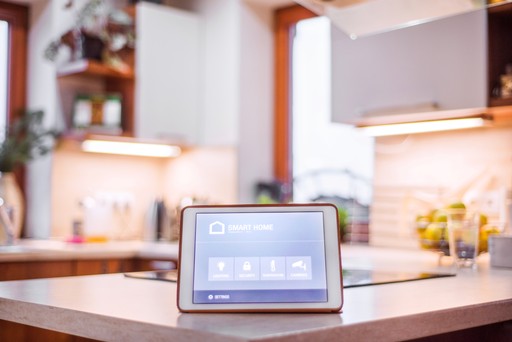
The smart home has evolved from a futuristic concept into an accessible reality that millions of people enjoy every day. What started with basic WiFi-connected light bulbs and thermostats has expanded into a comprehensive ecosystem of devices that can automate nearly every aspect of home life. From voice-controlled lighting and automated climate management to security cameras you can check from anywhere in the world, smart home technology is making homes more comfortable, efficient, and secure.
The appeal of smart home technology is straightforward: it saves time, reduces energy consumption, and makes life more convenient. Imagine waking up to lights that gradually brighten, a coffee maker that starts brewing automatically, and a house that adjusts its temperature based on your location. These conveniences add up to a lifestyle that feels more responsive to your needs and preferences.
Building Your Smart Home Ecosystem
The foundation of any smart home is a central hub that acts as the brain of your system. Major platforms include Amazon Alexa, Google Home, Apple HomeKit, and Samsung SmartThings. Each ecosystem has its strengths, and choosing the right platform is one of the most important decisions you will make because it affects device compatibility and functionality for years to come.
Amazon Alexa dominates the smart home market due to its device variety and extensive skill library that extends functionality through third-party integrations. Google Home excels at natural language processing and integration with Google services. Apple HomeKit prioritizes privacy and security but offers fewer device options. Samsung SmartThings provides flexibility and works with multiple voice assistants.
The key to building a smart home successfully is starting with the platform that best matches your needs and preferences, then expanding incrementally with compatible devices. Rushing out and buying dozens of devices before understanding the ecosystem often leads to incompatibilities and frustration.
Smart Home Device Comparison
{{products-start|Smart Home Device Comparison|#0071E3}}
{{product|Amazon Echo (5th Gen)|4.6|$99|Best Assistant|Excellent Alexa integration;Great sound quality;Smart home hub built-in|Privacy concerns;Amazon ecosystem lock-in}}
{{product|Google Nest Thermostat|4.7|$129|Best Savings|Learns your schedule;Saves up to 15% on energy;Sleek modern design|No remote sensors;Requires C-wire usually}}
{{product|Philips Hue Starter Kit|4.5|$139||16 million colors;Works with all assistants;Reliable & proven|Requires Hue Bridge;Expensive per bulb}}
{{product|Ring Video Doorbell 4|4.4|$199||Sharp 1080p video;Two-way audio;Motion detection zones|Subscription for video history;Bulkier design}}
{{products-end}}
Device Type | Function | Cost Range | Ease of Setup | Value Proposition |
|---|---|---|---|---|
Smart Speaker | Voice control hub, music, information | $30-200 | Easy | Very High (serves as hub) |
Smart Light Bulb | Remote/voice control, color, scheduling | $10-30 | Very Easy | Medium (energy savings + convenience) |
Smart Thermostat | Temperature control, learning, scheduling | $200-400 | Moderate | Very High (energy savings significant) |
Smart Plug | Control any device with power, scheduling | $10-25 | Very Easy | High (add smart to anything) |
Smart Lock | Remote unlock, access logs, keyless entry | $100-300 | Moderate | High (convenience + security) |
Security Camera | Video monitoring, alerts, cloud storage | $50-300 | Easy | Very High (peace of mind) |
Robot Vacuum | Automated floor cleaning, scheduling | $300-1000 | Easy | Medium (saves time, not essential) |
Smart Lighting Transforms Your Space
Smart lighting is one of the easiest entry points into home automation because bulbs are simple to install and the benefits are immediately obvious. Smart bulbs offer three main advantages over traditional lighting: convenience through remote and voice control, energy efficiency through automated schedules, and the ability to set different moods through color and brightness adjustment.
Modern smart bulbs come in all shapes and sizes, from traditional A19 bulbs to candelabra bulbs, spotlights, and strip lights. They work with existing light fixtures, so you do not need to rewire your home or replace fixtures. They are dimmable, support millions of colors (if you choose color-capable bulbs), and can be scheduled to turn on or off automatically.
The psychological benefits of smart lighting should not be underestimated. Programmable lighting that gradually brightens in the morning can help regulate your circadian rhythm and make waking up easier. Lighting that gradually dims in the evening can signal to your body that it is time to wind down for sleep. These subtle effects on our biology can translate to better sleep quality and more stable energy levels throughout the day.
Smart Thermostats Save Money and Improve Comfort
Smart thermostats are one of the smartest investments in a smart home because they typically pay for themselves through energy savings within a few years. These devices can reduce heating and cooling costs by 10-23% by learning your schedule, understanding your temperature preferences, and optimizing your HVAC system's efficiency.
The best smart thermostats use machine learning to adapt to your patterns. If you always lower the temperature at 10 PM and raise it at 6 AM, the thermostat learns this pattern and adjusts automatically without you having to manually set anything. Some thermostats even use weather forecasts to anticipate when to start heating or cooling, so your home reaches the desired temperature exactly when you need it.
Modern smart thermostats can also be controlled remotely through smartphone apps, allowing you to adjust your home's temperature from work or while traveling. This prevents waste from heating or cooling an empty house.
Security Cameras Provide Peace of Mind
Smart security cameras have become affordable enough that even budget-conscious homeowners can afford whole-home coverage. Modern cameras provide high-resolution video, night vision, motion detection with alerts sent to your smartphone, and the ability to check in on your home from anywhere in the world.
The value proposition of security cameras extends beyond theft prevention. They can help you monitor package deliveries, keep an eye on contractors working in your home, check on pets while you are away, and provide footage in case of incidents. Many cameras also support two-way audio, allowing you to talk to visitors at your door even when you are not home.
Privacy is an important consideration with security cameras. Be mindful of where you place cameras and ensure they are not recording areas where you or guests have a reasonable expectation of privacy. Check the privacy policies of your camera manufacturer to understand how video data is stored and accessed.
Smart Plugs Add Intelligence to Any Device
Smart plugs are one of the most underrated smart home devices because they are incredibly versatile. A smart plug adds remote control and scheduling to any device that plugs into an outlet. This means you can make virtually any device smart without buying a specific smart version of that device.
Use smart plugs to control lamps, fans, space heaters, coffee makers, water fountains, and countless other devices. You can schedule them to turn on and off at specific times, set them to turn off after a certain duration (useful for preventing devices from running all day), and control them remotely from anywhere.
Smart plugs also help reduce phantom power consumption from devices that draw power even when turned off. Many modern devices include standby power consumption that is completely unnecessary. Plugging them into smart plugs that you schedule to power off when not in use can reduce your overall energy consumption and lower your utility bills.
The Privacy and Security Considerations
As with any internet-connected device, smart home devices introduce privacy and security considerations that should not be ignored. Every device you add to your network is a potential vulnerability that could be exploited by bad actors.
To minimize risks, follow these best practices: use strong, unique passwords for your smart home accounts; enable two-factor authentication wherever available; keep your devices and hub firmware updated to the latest versions; and regularly review permissions granted to connected apps and services.
Consider the privacy policies of your chosen platform and manufacturer. Some companies log minimal data and keep your information private, while others collect extensive data about your home and routines to improve their services and feed advertising algorithms. Choose platforms and devices from companies whose privacy practices align with your comfort level.
Getting Started with Smart Home Automation
Starting your smart home journey does not require purchasing dozens of devices or spending thousands of dollars. Start with a central hub (a smart speaker) and one or two devices that will provide clear value. A smart thermostat and a smart speaker are an excellent starting combination because the thermostat saves money while the speaker provides convenient voice control.
{{cta|minimal|Not sure where to start?|See our beginner's guide to the best smart home devices for every budget.|View Our Top Picks|https://www.bestdealguide.com/blog|#E38836|}}
Experiment with different devices and automations to understand what actually improves your life. Some people love smart lighting, while others find it unnecessary. Some people use their robot vacuums multiple times per week, while others let them collect dust in the closet.
The best smart home is one that is tailored to your specific needs and preferences. Do not feel pressure to automate everything. Instead, focus on automations that clearly improve your daily life, save you time or money, or provide genuine peace of mind. A smaller smart home built on technologies you actually use is far more satisfying than a large collection of devices you feel obligated to maintain.
{{faq-start|Smart Home — Frequently Asked Questions|Everything you need to know before going smart|#E38836}}
{{faq-q|What smart home device should I buy first?}}
{{faq-a|Start with a smart speaker (Amazon Echo or Google Nest)—it acts as the hub for everything else and is useful on its own for music, timers, and information. Smart plugs are the second-best starting point for their versatility.}}
{{faq-q|Do smart home devices work without Wi-Fi?}}
{{faq-a|Most smart home devices require Wi-Fi for setup and cloud features. Some devices like Zigbee-based sensors work on local mesh networks, but you'll still need an internet-connected hub. If your Wi-Fi goes down, most devices lose their 'smart' features.}}
{{faq-q|Are smart home devices secure?}}
{{faq-a|Use strong, unique passwords, keep firmware updated, and buy from reputable brands. Avoid cheap no-name devices that may have poor security practices. Setting up a separate Wi-Fi network for IoT devices adds another layer of protection.}}
{{faq-q|Can I mix Amazon Alexa and Google Home devices?}}
{{faq-a|Yes, many smart home products work with both ecosystems. However, for the smoothest experience, it helps to pick one primary voice assistant and build around it. The Matter standard is making cross-platform compatibility even better.}}
{{faq-q|How much does a smart home cost?}}
{{faq-a|You can start with a useful smart home setup for under $100—a smart speaker ($30-50) and a few smart plugs ($10-15 each). A fully automated home with smart lighting, locks, cameras, and thermostats typically runs $500-2,000.}}
{{faq-end}}