Best Home Workouts for Busy People

Best Home Workouts for Busy People
Finding time to exercise is one of the biggest challenges for working professionals, parents, and students alike. Between commuting, meetings, family obligations, and the general demands of modern life, the gym often falls to the bottom of the priority list. But here is the truth: you do not need a gym membership, fancy equipment, or even a full hour to get an effective workout.
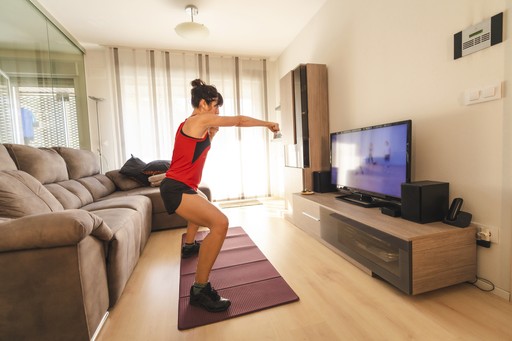
Home workouts have exploded in popularity, and for good reason. They eliminate travel time, require minimal equipment, and can be adapted to fit any schedule. Whether you have 10 minutes or 45 minutes, there is a workout routine that can help you build strength, improve cardiovascular health, and boost your energy levels without ever leaving your living room.
Why Home Workouts Are Just as Effective
Research consistently shows that bodyweight exercises and minimal-equipment home workouts can produce results comparable to gym-based training for most fitness goals. A study published in the Journal of Strength and Conditioning Research found that push-ups activate the same muscle groups as bench presses when performed with proper form and progressive overload.
The key advantage of home workouts is consistency. The best workout program is the one you actually stick with, and removing barriers like commute time, gym crowds, and scheduling constraints dramatically increases adherence rates. People who exercise at home are 50% more likely to maintain their routine over six months compared to those who rely solely on gym access.
Home workouts also offer flexibility in intensity. You can do a quick 10-minute high-intensity session before work, a moderate 20-minute strength routine during lunch, or a longer 40-minute full-body session on weekends. This adaptability makes it possible to stay active even during the busiest weeks.
Home vs Gym Workout Comparison
Factor | Home Workouts | Gym Workouts | Winner |
|---|---|---|---|
Cost | Free to minimal | $30-100/month | Home |
Convenience | Anytime, no commute | Fixed hours, travel required | Home |
Equipment Variety | Limited to bodyweight and basics | Full range of machines | Gym |
Social Motivation | Solo (unless virtual) | Group classes, workout partners | Gym |
Time Efficiency | No commute, start immediately | 30-60 min commute added | Home |
Privacy | Complete privacy | Shared space | Home |
Heavy Lifting | Limited without equipment | Full heavy lifting capability | Gym |
Consistency | Higher adherence rates | Lower adherence rates | Home |
The 10-Minute HIIT Blast
High-Intensity Interval Training is the most time-efficient workout format available. In just 10 minutes, a properly structured HIIT session can burn as many calories as 30 minutes of moderate-intensity exercise while providing superior cardiovascular benefits. The key is pushing yourself to near-maximum effort during work intervals and allowing brief recovery periods.
A simple but effective 10-minute HIIT routine consists of 30 seconds of work followed by 15 seconds of rest, cycling through five exercises for two rounds. Start with jumping jacks to elevate your heart rate, move to high knees for continued cardio intensity, transition to burpees for full-body engagement, follow with mountain climbers for core activation, and finish with squat jumps for lower body power.
This format works because it triggers excess post-exercise oxygen consumption, commonly known as the afterburn effect. Your metabolism remains elevated for hours after the workout, meaning you continue burning calories long after you have finished exercising. For busy people, this makes HIIT the highest return-on-time investment in fitness.
{{checklist-start|Quick Workout Tracker|Check off exercises as you complete them. Aim to finish a full circuit!|#0071E3}}
{{checklist-cat|Warm-Up (3 min)}}
{{checklist-item|30 seconds jumping jacks|Start light to get blood flowing. Focus on full range of motion with arms overhead.}}
{{checklist-item|30 seconds high knees|Drive knees to hip height. Keep your core tight and land softly on the balls of your feet.}}
{{checklist-item|30 seconds arm circles + hip rotations|Loosen up your joints before the main workout to prevent injury.}}
{{checklist-cat|Upper Body (5 min)}}
{{checklist-item|15 push-ups (or modified)|Keep your body in a straight line. Modify on knees if needed — form matters more than count.}}
{{checklist-item|30-second plank hold|Engage your core, squeeze your glutes, and keep hips level. Breathe steadily throughout.}}
{{checklist-item|12 tricep dips (using a chair)|Keep your back close to the chair. Lower until elbows reach 90 degrees.}}
{{checklist-cat|Lower Body (5 min)}}
{{checklist-item|20 bodyweight squats|Push hips back like sitting in a chair. Keep weight in your heels and knees tracking over toes.}}
{{checklist-item|12 lunges per leg|Step far enough forward that both knees form 90-degree angles. Keep your torso upright.}}
{{checklist-item|30-second wall sit|Slide down the wall until thighs are parallel to the floor. This builds isometric strength and endurance.}}
{{checklist-cat|Core & Cooldown (4 min)}}
{{checklist-item|20 bicycle crunches|Touch elbow to opposite knee. Go slow and controlled — speed reduces effectiveness.}}
{{checklist-item|15 leg raises|Press your lower back into the floor. If it arches, bend your knees slightly.}}
{{checklist-item|2-minute full body stretch|Hold each stretch 20-30 seconds. Focus on hamstrings, quads, shoulders, and hip flexors.}}
{{checklist-end}}

20-Minute Full-Body Strength Routine
Strength training is essential for long-term health, metabolism, and functional fitness. This 20-minute routine targets every major muscle group using only bodyweight, making it perfect for mornings before work or evenings after the kids are in bed. Perform each exercise for 45 seconds with 15 seconds of rest between movements.
{{cta|primary|Get Started Today|No gym needed. These home workout essentials cost less than one month of a gym membership.|Shop Home Workout Gear|https://www.amazon.com/s?k=home+workout+equipment|#4A7C59|#F0FAF0}}
Begin with push-ups, focusing on controlled movement down and explosive power up. Follow with bodyweight squats, ensuring your thighs reach parallel to the floor. Move to plank holds for core stability, then lunges alternating between legs. Continue with tricep dips using a sturdy chair, glute bridges for posterior chain strength, and finish with bicycle crunches for oblique engagement.
Progressive overload is the key to continued improvement with bodyweight exercises. Once a movement becomes easy, increase the challenge by slowing down the tempo, adding pauses at the hardest point of the movement, increasing repetitions, or progressing to harder variations. For example, standard push-ups can progress to diamond push-ups, decline push-ups, and eventually one-arm push-ups.
Workout Schedule by Time Available
Time Available | Workout Type | Intensity | Best For | Equipment Needed |
|---|---|---|---|---|
10 minutes | HIIT Blast | Very High | Fat burning and cardio | None |
15 minutes | Tabata Circuit | High | Metabolic conditioning | None |
20 minutes | Full-Body Strength | Moderate-High | Muscle building and toning | Optional dumbbells |
30 minutes | Strength + Cardio Split | Moderate | Balanced fitness | Resistance bands |
45 minutes | Complete Training Session | Moderate | Comprehensive fitness | Dumbbells and mat |
Essential Home Workout Equipment
While bodyweight exercises are incredibly effective, a small investment in basic equipment can dramatically expand your exercise options and accelerate your progress. The good news is that you do not need to spend thousands of dollars on a home gym. A few carefully chosen items under $100 total can provide everything most people need for a comprehensive home training program.
A set of resistance bands is arguably the most versatile and affordable piece of equipment you can own. They provide variable resistance that challenges muscles differently than gravity-based exercises, they take up virtually no space, and they can replicate many gym machine exercises. A quality set of looped bands with different resistance levels typically costs between $15 and $30.
An adjustable set of dumbbells is the next best investment. They allow you to add external load to squats, lunges, presses, and rows, enabling progressive overload beyond what bodyweight alone can provide. A yoga mat provides cushioning for floor exercises and helps define your workout space. A pull-up bar that fits in a doorframe rounds out a basic but effective home gym.
Budget Home Gym Equipment Comparison
Equipment | Cost Range | Exercises Enabled | Space Required | Value Rating |
|---|---|---|---|---|
Resistance Bands Set | $15-30 | 50+ exercises | Fits in a drawer | Excellent |
Adjustable Dumbbells | $50-150 | 100+ exercises | Small corner | Excellent |
Yoga Mat | $15-30 | All floor exercises | Rolls up | Very Good |
Pull-Up Bar | $25-40 | 15+ exercises | Doorframe mount | Very Good |
Jump Rope | $10-20 | Cardio warm-up | Fits in a bag | Good |
Kettlebell | $30-60 | 30+ exercises | Small corner | Good |
Building a Weekly Workout Schedule
Consistency is more important than intensity when it comes to long-term fitness results. The most effective approach for busy people is to schedule workouts like appointments, blocking specific times in your calendar rather than hoping to find time. Even three sessions per week can produce significant improvements in strength, endurance, and body composition over time.
A practical weekly schedule might look like this: Monday and Thursday for strength-focused sessions targeting upper and lower body respectively, Wednesday for a HIIT cardio session, and Saturday for a longer mixed session. This provides balanced training across all fitness components while leaving plenty of recovery days.
The timing of your workouts matters less than the consistency. Some people thrive with early morning sessions that energize them for the day ahead. Others prefer evening workouts as a way to decompress after work. Research shows minimal difference in results between morning and evening exercise, so choose the time that you can most reliably commit to.
Recovery and Injury Prevention
Recovery is where your body actually builds muscle and improves fitness. Without adequate recovery, you risk overtraining, injury, and burnout. For home workouts, this means taking at least one to two rest days per week, getting seven to nine hours of sleep, and incorporating mobility work into your routine.
Dynamic stretching before workouts and static stretching after workouts can significantly reduce injury risk. Spend five minutes warming up with movements like arm circles, leg swings, and hip rotations before any intense exercise. After your workout, hold stretches for 20 to 30 seconds each, focusing on the muscle groups you trained.
Listen to your body and know the difference between productive discomfort and pain. Muscle soreness after a new exercise is normal and typically resolves within 48 to 72 hours. Sharp pain, joint pain, or soreness that does not improve with rest may indicate an injury that needs attention. It is always better to take an extra rest day than to push through pain and risk a more serious setback.
Staying Motivated Without a Gym
One of the biggest challenges of home workouts is maintaining motivation without the social environment of a gym. The solution is to create systems and habits that make exercise feel automatic rather than relying on willpower alone. Set out your workout clothes the night before, designate a specific area in your home as your exercise space, and establish a pre-workout routine that signals to your brain that it is time to move.
Tracking your progress provides powerful motivation. Keep a simple log of your workouts, noting exercises, sets, reps, and how you felt. Watching your numbers improve over weeks and months creates a sense of accomplishment that fuels continued effort. Many free apps can help you track workouts and visualize your progress over time.
{{cta|banner|Everything You Need Under $50|Resistance bands, a yoga mat, and adjustable dumbbells — that's a complete home gym.|See Our Top Picks|https://www.amazon.com/s?k=home+gym+starter+kit|#4A7C59|#F0FAF0}}
Virtual workout communities and online challenges can replicate some of the social motivation that gyms provide. Joining a fitness challenge with friends or participating in online workout groups creates accountability and camaraderie. Even something as simple as texting a friend after each workout can significantly increase your likelihood of sticking with your routine long term.

Getting Started Today
The best time to start working out at home is right now. You do not need to wait for the perfect equipment, the perfect program, or the perfect day. Start with a single 10-minute session today, and build from there. The compound effect of consistent small efforts is far more powerful than sporadic intense sessions.
Remember that fitness is a journey, not a destination. There will be days when you miss a workout, and that is perfectly fine. What matters is getting back on track the next day rather than letting one missed session become a missed week. Progress is not always linear, but every workout you complete is an investment in your long-term health and well-being.
{{faq-start|Home Workouts — Frequently Asked Questions|Get fit on your schedule|#4A7C59}}
{{faq-q|How long should home workouts be?}}
{{faq-a|Even 20-30 minutes is effective when you maintain intensity. Research shows that shorter, consistent workouts produce better results than occasional long sessions. Three 20-minute sessions per week beats one 90-minute session.}}
{{faq-q|Can I build muscle without a gym?}}
{{faq-a|Yes. Bodyweight exercises, resistance bands, and adjustable dumbbells can build significant muscle. Progressive overload — gradually making exercises harder — is the key principle, and it works regardless of equipment.}}
{{faq-q|What's the best time to work out at home?}}
{{faq-a|The best time is whatever you'll consistently do. Morning workouts are easier to maintain as a habit, but afternoon/evening workouts may yield slightly better performance due to body temperature and flexibility peaking later in the day.}}
{{faq-q|Do I need rest days?}}
{{faq-a|Yes. Muscles grow during recovery, not during exercise. Take at least 1-2 rest days per week. You can still do light activity like walking or gentle stretching on rest days — just avoid intense training of the same muscle groups.}}
{{faq-q|What if I can only work out for 10 minutes?}}
{{faq-a|A 10-minute workout is infinitely better than no workout. Focus on compound movements like burpees, squats, and push-ups for maximum impact. High-intensity interval training (HIIT) in short bursts can be surprisingly effective.}}
{{faq-end}}